


- Nepal’s argeli farming is expanding in mid-hill districts to supply high-quality fiber for Japan’s currency and premium paper manufacturing industry.
- The transition from forest collection to organized cultivation provides rural households with steady income, jobs, and increased economic participation for women.
- Japan is the primary market driver, with long-term purchase agreements and technical support stabilizing demand for Nepali farmers and cooperatives.
- Key challenges include limited domestic processing capabilities, infrastructure gaps, and heavy dependence on a single export destination for long-term sustainability.
Kathmandu, Nepal: Argeli farming is steadily emerging as a structured rural production industry in Nepal, linking mid-hill farmers with Japan’s high-value paper manufacturing sector and creating new income opportunities across several districts.
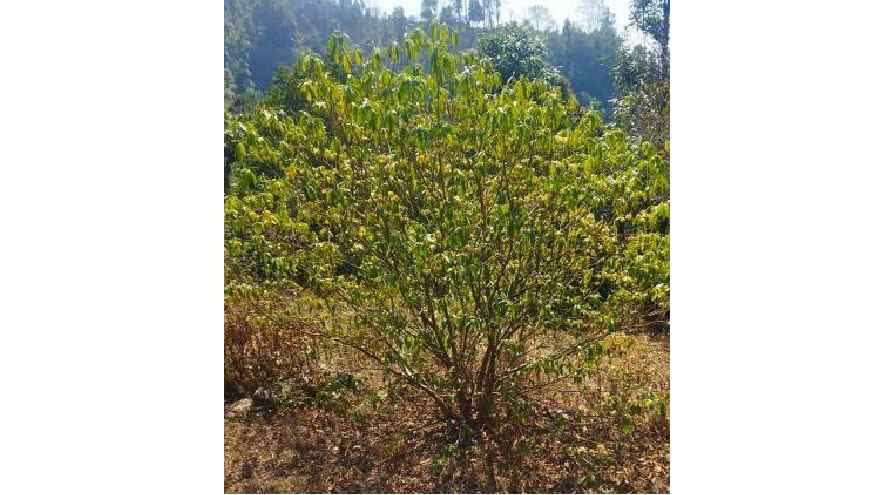 Once a wild forest shrub, argeli (Edgeworthia gardneri) is now being widely cultivated as demand grows in Japan, where its fiber is used in the production of high-quality paper for currency notes. The shift marks an important transformation from forest-based collection to organized agricultural production.
Production Base Expands in Mid-Hill Districts
Argeli cultivation is expanding in districts including Ilam, Panchthar, Dolakha, Ramechhap, and Baglung, where farmers are using marginal and sloped land unsuitable for traditional crops.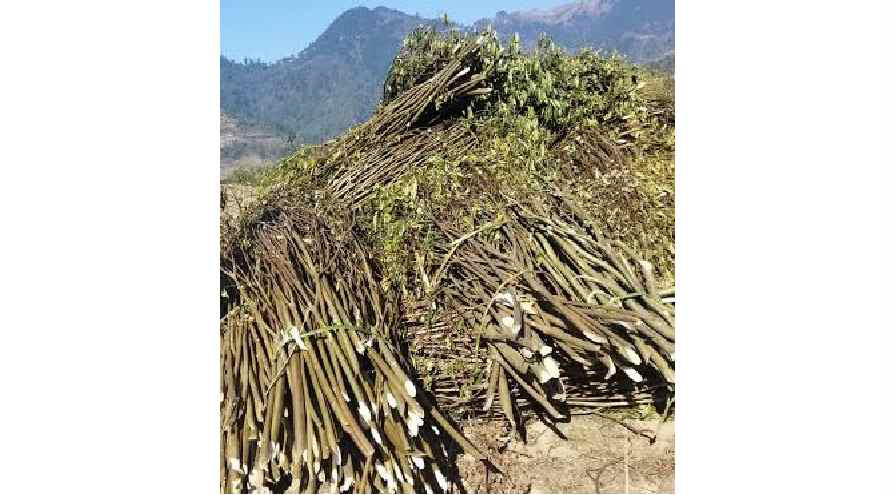 Agricultural experts say the plant’s low input requirements and suitability for hilly terrain have made it an attractive option for smallholder farmers seeking alternative livelihoods.
Structured Production Chain Taking Shape
A basic production and supply chain for argeli is now taking shape in rural Nepal: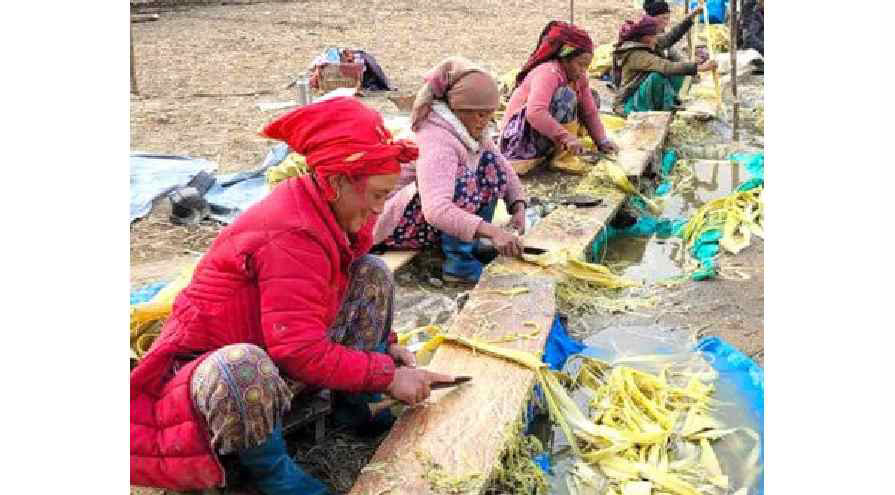 Cultivation: Farmers grow argeli on private and community land
Harvesting: Mature bark is collected using controlled cutting practices
Processing: Bark is peeled, dried, and sorted, often by local cooperatives
Collection: Community-level centers aggregate supply for export
Export: Raw or semi-processed bark is exported primarily to Japan
Women’s groups play a significant role in the processing stage, particularly in peeling, drying, and grading activities.
Japan Remains the Main Market Driver
The growth of the sector is closely linked to sustained demand from Japan. Japanese paper manufacturers, supported by long-term cooperation programs, have been sourcing argeli as a substitute for declining domestic mitsumata production.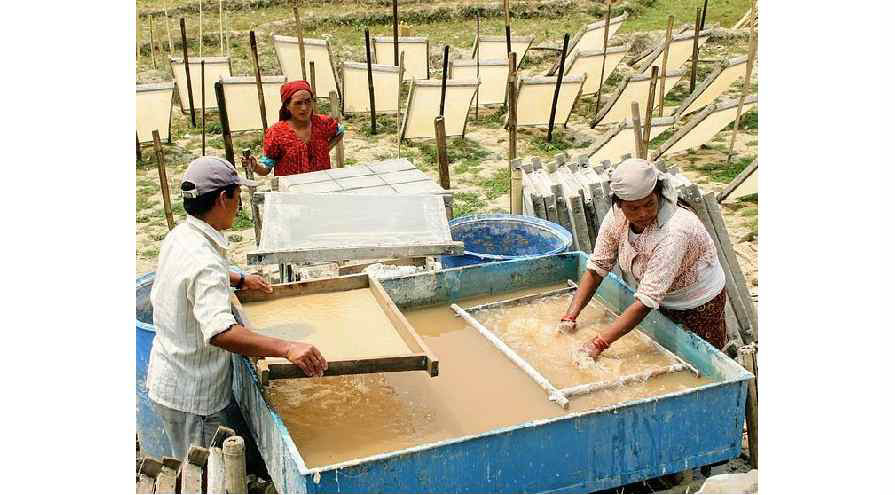 The Japan International Cooperation Agency (JICA) and private sector partners have also been involved in providing technical training and quality improvement support to Nepali farmers.
Long-term purchase agreements have helped stabilize demand, encouraging farmers to expand cultivation.
Rural Economy and Social Impact
Argeli farming is increasingly contributing to rural household incomes, particularly in remote mid-hill communities.
Key reported impacts include:
Steady cash income for farming households
Employment generation in harvesting and processing
Increased participation of women in cooperatives and production groups
Strengthening of community-based rural enterprises In several villages, families report improved financial stability due to regular income from argeli-related activities.
Environmental and Land Use Benefits
The expansion of argeli cultivation is also contributing to environmental management in rural areas.
Farmers are increasingly shifting from wild harvesting to organized cultivation, reducing pressure on natural forests. The crop is also being planted on degraded and unused land, improving land utilization in hilly regions.
Experts say this transition supports both income generation and forest conservation objectives.
Challenges in the Production and Export Chain
Despite its growing importance, the sector faces several structural challenges:
Limited domestic processing: Most argeli is exported in raw form, reducing potential value addition within Nepal
Infrastructure gaps: Poor road access and limited processing facilities increase transport and handling costs
Market dependence: Heavy reliance on a single export destination—Japan—creates long-term vulnerability
Technical limitations: Lack of advanced processing technology and quality standardization
Outlook for Expansion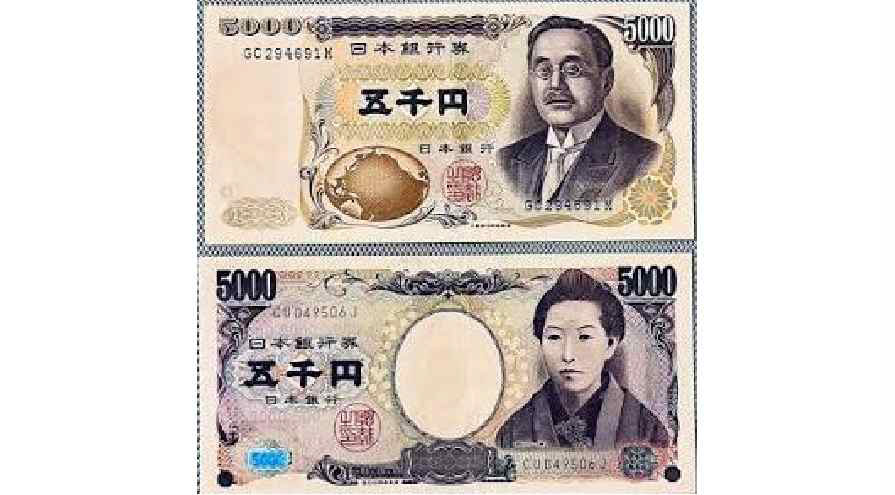 Agricultural and forestry experts believe argeli has strong potential to develop into a more industrialized rural sector if supported by investment and policy reforms.
Key recommendations include expanding local processing industries, improving infrastructure, and diversifying export markets beyond Japan.
Conclusion
From the mid-hill villages of Nepal to industrial paper mills in Japan, argeli has created an unexpected but growing economic link between rural producers and global markets. While still in an early stage of industrial development, the sector is already providing new income streams, social empowerment, and environmental benefits.
With sustained support, argeli farming is expected to play a stronger role in Nepal’s rural economy in the coming years.
📊 Lokta Paper & Products – Export Market Analysis
1. Product Portfolio Overview
Category Product Type Market Positioning
Stationery Lokta notebooks Eco-friendly daily use & gifting
Stationery Envelopes & sets Premium handmade stationery
Gift Items Gift boxes Luxury eco-packaging
Paper Goods Photo albums Archival & decorative use
2. Export Price Segmentation
📦 Finished Products (Retail/Export Price Range)
Product Type Price Range (USD) Market Segment
Small notebook $3 – $10 Entry-level export stationery
Luxury journal $8 – $25 Premium handmade segment
Gift boxes $5 – $20+ Eco-luxury packaging
📄 Raw Material Pricing (Lokta Paper – Export Level)
Variety Quality Level Price Range (USD)
Natural Lokta Standard $0.80 – $2.50 / sheet
White Lokta Premium $1.50 – $3.50 / sheet
Colored Lokta Decorative $1.20 – $3.00 / sheet
Deckle Edge Artistic Premium $2.00 – $5.00 / sheet
Printed Lokta Export Gift Grade $2.50 – $6.00 / sheet
Heavy GSM High-end archival $2.50 – $6.50 / sheet
3. Market Demand Analysis
🌏 Major Export Markets
Country Demand Driver Key Use Cases
🇯🇵 Japan High-quality fiber paper tradition Art paper, cultural stationery
🇺🇸 USA Strong craft & DIY market Journals, scrapbooking, branding
🇪🇺 Europe Eco-sustainability focus Luxury packaging, green products
🇦🇺 Australia Design & gift culture Boutique stationery & gifts
4. Key Insights (Data Summary)
📈 Premium Lokta products ($2.5–$6.5/sheet) dominate high-margin export segment
🎁 Gift and stationery products show strong demand in USA & Europe
🌱 Eco-friendly positioning is the core value driver across all markets
🏭 Value addition (printing, coloring, GSM enhancement) increases price by 2–5x vs raw Lokta
🇯🇵 Japan remains the highest quality-sensitive market
5. Market Positioning Summary
Low-end: Natural Lokta (bulk eco-paper supply)
Mid-range: Colored & white Lokta (stationery industry)
High-end: Deckle, printed, archival Lokta (luxury export goods)


