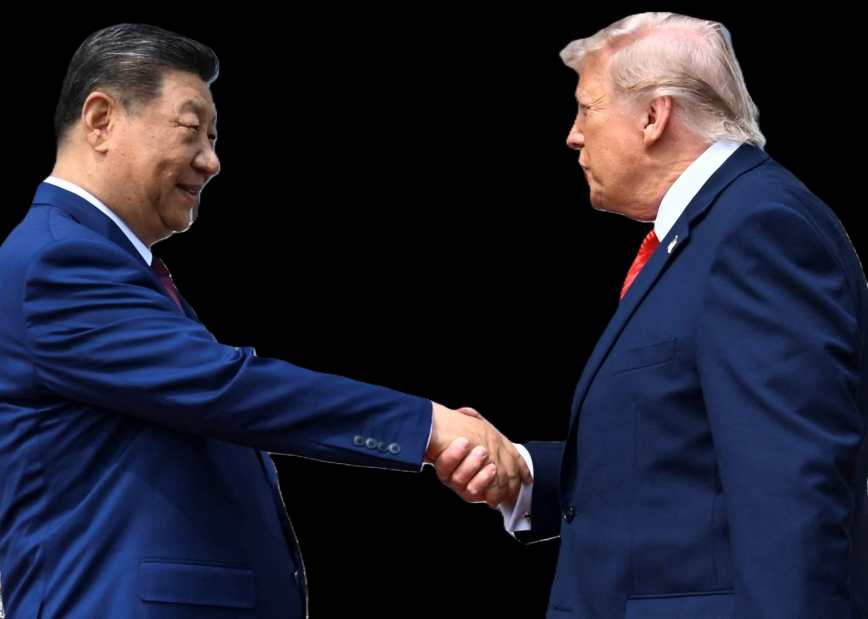
Beijing, China: The Trump–Xi summit in Beijing is less of a diplomatic "reset" and more like a high-stakes meeting between two rival CEOs who realize their companies are too intertwined to ever truly part ways. While the cameras capture the pomp and ceremony, the real story is found in the quiet tension behind the smiles.
The "Frenemy" Paradox
At the Great Hall of the People, the optics are designed to project absolute control. For Xi Jinping, the grand reception signals that China is a peer to the United States, not a subordinate. For Donald Trump, the "great leader" rhetoric serves his preference for personal diplomacy—the idea that a rapport between two men can override the friction between two systems.
However, the "partners, not rivals" language is a thin veil. We have entered an era of adversarial coexistence. Both nations are moving away from the era of global integration and toward a "de-risked" world where they trade out of necessity while preparing for conflict out of caution.
The New Battlefront: Silicon and Code
The most telling detail of this summit isn't who is in the military uniforms, but who is in the business suits. The presence of tech giants like Elon Musk and Jensen Huang confirms that the "front line" has moved from borders to data centers.
The AI Race: This isn't just about better chatbots; it’s about whose algorithms will control the global economy and military strategy.
The Goal: Success in Beijing isn't a "peace treaty" for technology; it’s about establishing guardrails. Both sides want to ensure that their race for AI supremacy doesn't lead to a catastrophic technical accident or an unintended military escalation.
Flashpoints: Taiwan and the Global Map
While the leaders talk trade, the "ghosts" in the room are Taiwan and Iran.
Taiwan: It remains the most dangerous point of friction. For Beijing, it is a matter of historical destiny; for Washington, it is the cornerstone of Pacific security. The "win" here is simply leaving the room without making the situation worse.
Iran: This reflects the new reality that US-China relations affect every corner of the globe. The US wants China to use its "wallet" (economic influence) to stabilize the Middle East, while China uses its "seat at the table" to offer an alternative to Western-led alliances.
The "New Normal" for the Rest of Us
What does this mean for the person watching from home? It means the world is no longer looking for a "grand bargain." The days of the US and China moving toward a shared vision of the future are over.
Instead, we are watching a managed competition. The success of this summit isn't measured by what is signed, but by the "silence" that follows. If the supply chains keep moving, the chips keep shipping, and the rhetoric stays civil, the summit will have done its job. We are witnessing two superpowers learning how to disagree without destroying the global stage they both stand on.