In the contemporary global order—marked by geopolitical competition, climate crisis, cultural fragmentation, and identity conflicts—the need for bridge-builders has never been greater. Among emerging South Asian personalities contributing to the discourse of people-to-people diplomacy is Pradeep Khanal, a south asian spiritual traveler, social figure, and advocate of interfaith harmony. His engagements across South Asia and beyond reflect an evolving model of international relations—one rooted not merely in statecraft, but in civilizational dialogue, cultural diplomacy, and spiritual connectivity.
A South Asian Context
South Asia is one of the most geopolitically sensitive yet spiritually rich regions of the world. It is home to ancient civilizations, sacred geographies, and profound philosophical traditions. From the Himalayan belt to the Indian Ocean, the region carries shared cultural memories that predate modern nation-states. However, political tensions, border disputes, and historical grievances have often overshadowed these shared legacies.
In this environment, non-state actors—spiritual leaders, cultural ambassadors, and social reformers—play a subtle yet powerful role in strengthening international understanding. Pradeep Khanal's work aligns with this soft-diplomatic tradition.
Spiritual Pilgrimage as Cultural Diplomacy
Pradeep Khanal's extensive pilgrimage across sacred sites in Nepal, India, Bangladesh, Sri Lanka, Pakistan, and Tibet (China) reflects not only religious devotion but also transnational cultural engagement. His journey draws symbolic comparisons with spiritual travelers such as Adi Shankaracharya and Guru Nanak Dev Ji, who traversed vast regions to spread philosophical dialogue and unity.
By visiting Shakti Peeths, Jyotirlingas, Buddhist pilgrimage centers, and Sikh Gurudwaras, Khanal demonstrates a civilizational approach to diplomacy—one that recognizes that borders may divide states, but sacred geography often unites people.
His engagement with interfaith traditions—Hinduism, Buddhism, Jainism, and Sikhism—presents a model of inclusive spirituality. In a time when religion is often politicized, his approach frames faith as a unifying rather than divisive force.
Engagement with Political Leadership
Pradeep Khanal's profile in international relations is further shaped by his meetings and dialogues with prominent political leaders across South Asia.
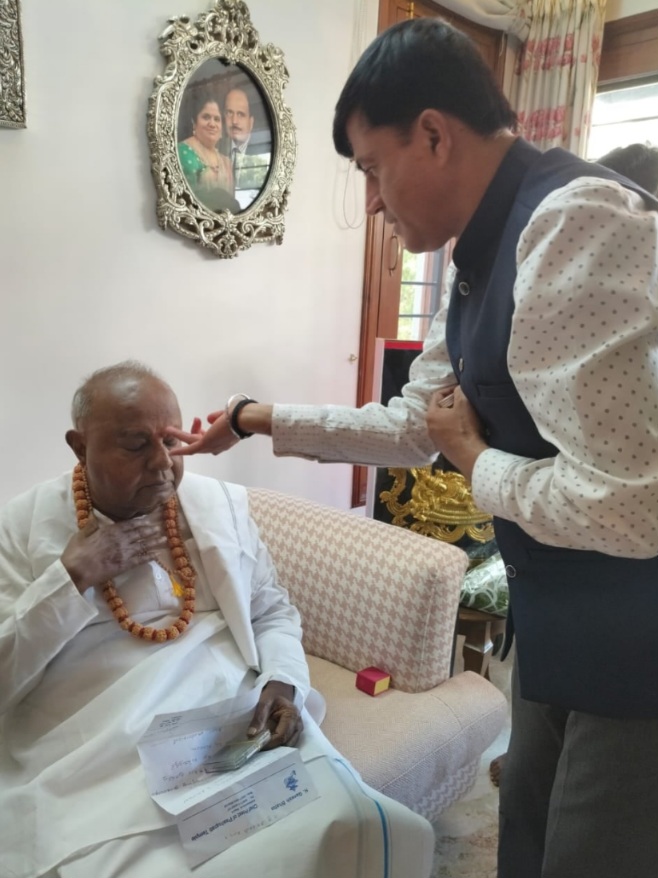
He has met with Nepal's President Ram Chandra Paudel and held discussions regarding cultural and spiritual initiatives. In India, he has interacted with former Prime Minister H. D. Deve Gowda. He has also engaged with Bhutan's Prime Minister Tshering Tobgay, highlighting cross-border friendship and cooperation.
These meetings are significant not merely as ceremonial interactions but as platforms for discussing people-centric diplomacy, cultural exchange, and spiritual tourism.
In addition, Khanal held discussions with the Acting Secretary General of South Asian Association for Regional Cooperation (SAARC), focusing on strengthening regional cooperation and addressing shared challenges such as climate change. Such engagements indicate a broader understanding of diplomacy that includes environmental sustainability and regional integration.
The Concept of Spiritual Diplomacy
Traditional international relations theory often emphasizes realism—power, security, and strategic interests. However, contemporary global politics increasingly recognizes the importance of soft power. Cultural heritage, tourism, religion, and civil society networks influence international perceptions and long-term partnerships.
Pradeep Khanal's approach can be described as "spiritual diplomacy." This framework emphasizes:
Interfaith respect and harmony
Cultural heritage preservation
Pilgrimage-based tourism cooperation
Civilizational dialogue beyond political differences
For example, sacred sites like Pashupatinath Temple in Nepal, Kashi Vishwanath Temple in India, and Lumbini hold immense cross-border spiritual significance. When promoted collaboratively, such sites strengthen regional bonds and economic development.
By connecting these sacred spaces through dialogue and documentation, Khanal contributes to the idea that cultural heritage can serve as a diplomatic bridge.
International Exposure and Global Dialogue
Having traveled to 28 countries, Pradeep Khanal's international exposure extends beyond South Asia. His engagements include programs conducted in the British Parliament on social issues and international relations. This reflects an attempt to place South Asian spiritual narratives within a global discourse.
In Europe and beyond, South Asian diaspora communities often seek cultural reconnection. Figures like Khanal serve as cultural connectors—bringing civilizational narratives into global platforms and encouraging intercultural understanding.
In a polarized world, such dialogue-based engagement aligns with emerging theories of transnational civil society diplomacy.
Religious Pluralism and Regional Stability
One of the key contributions of Pradeep Khanal's international engagement is the emphasis on religious pluralism. South Asia's shared spiritual heritage—Hindu, Buddhist, Jain, and Sikh—offers a foundation for peaceful coexistence.
Sites such as Bodh Gaya and Golden Temple attract global pilgrims. These places symbolize compassion, service, and enlightenment—values essential for regional peace.
By acknowledging the interconnectedness of these traditions, Khanal promotes a civilizational unity that transcends modern political boundaries.
Climate, Culture, and Regional Responsibility
During discussions within SAARC-related contexts, climate change and regional environmental cooperation have been highlighted. The Himalayan ecosystem—shared by Nepal, India, Bhutan, and China—is a fragile yet crucial resource.
Spiritual traditions across the region emphasize reverence for nature. Integrating this philosophical respect into regional policy dialogue can strengthen climate cooperation. Cultural diplomacy rooted in ecological consciousness could become a new dimension of South Asian international relations.
A Model Beyond State-Centric Diplomacy
Pradeep Khanal's international engagement reflects a shift from purely government-driven diplomacy toward a multi-layered approach:
People-to-people relations
Spiritual tourism diplomacy
Interfaith collaboration
Cultural heritage networking
Such models complement official diplomacy by building trust at societal levels. When citizens feel culturally connected, political cooperation becomes more sustainable.
Challenges and Criticisms
No public figure operating in international and religious domains is free from scrutiny. The intersection of spirituality and diplomacy can be sensitive. Maintaining neutrality, inclusivity, and transparency is essential to avoid perceptions of alignment with particular political agendas.
However, the core strength of spiritual diplomacy lies in its emphasis on dialogue rather than dominance.
The Broader Vision
Pradeep Khanal's broader vision—visible in initiatives such as large-scale spiritual gatherings and interfaith collaborations—suggests a desire to institutionalize civilizational dialogue. By inviting religious leaders, scholars, and policymakers to shared platforms, he aims to create a long-term network of cooperation.
In international relations theory, such efforts align with constructivist perspectives—where identity, norms, and shared values shape global politics as much as material power.
Conclusion
In the evolving landscape of international relations, figures like Pradeep Khanal represent an emerging category of cultural-spiritual diplomats. His engagements across political leadership, religious institutions, and international forums reflect a multidimensional approach to global interaction.
While states negotiate treaties and manage borders, individuals can build bridges of trust, heritage, and shared identity. In South Asia—where spirituality and history are deeply intertwined—such bridge-building is particularly relevant.
Pradeep Khanal's journey illustrates that international relations need not be confined to conference rooms and strategic doctrines. They can also unfold along pilgrimage routes, sacred rivers, and cultural dialogues—where the language of diplomacy is compassion, respect, and shared civilizational memory.
In a century seeking new models of cooperation, spiritual diplomacy may well become a complementary pillar of global peace—and figures like Pradeep Khanal stand as contributors to that unfolding narrative.