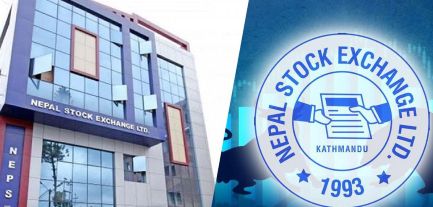
Kathmandu, Nepal, March 22, 2026: The Nepal Stock Exchange (NEPSE) is currently witnessing a powerful and synchronized recovery that suggests a turning point for the nation’s financial landscape. On Thursday, the benchmark index surged by 64.69 points to close at 2877, but the momentum was felt far beyond the numbers on the screen. While the banking sector led the charge, the rally was notably broad-based, with all 13 sub-indices ending in green territory. This collective upward movement signals a growing belief among investors that the market is finally moving past a period of "trial and error." Rather than a speculative bubble, analysts view this surge as a reaction to a much-needed systemic cleanup, where regulatory loopholes and past policy mistakes are being corrected to create a more transparent and stable environment.
The sense of a "clean slate" is particularly evident in the Commercial Bank group, which saw a 3.16% rise to reach 1522 points. This sector, which accounts for nearly 25% of the total market valuation, is showing rare technical strength. A phenomenon known as a "Golden Cross-Over"—where the short-term 50-day moving average climbs above the long-term 200-day average—is currently forming. Because these banks represent a massive Rs 1.15 trillion of the total Rs 4.74 trillion market value, their stability acts as an anchor for the entire exchange. As the "big players" resolve their internal governance issues and close the gaps that previously allowed for instability, the confidence is naturally rippling out to hydropower, insurance, and manufacturing sectors.
This recovery is also creating a unique window of opportunity for everyday retail investors. Despite the overall market surge, many of Nepal’s largest financial institutions remain priced at accessible levels. Currently, 10 out of the 19 listed commercial banks are trading below Rs 300 per share, with several prominent names like Nepal Investment Mega, Prabhu, Global IME, and Kumari still available for under Rs 250. These valuations suggest that while the market is rising, it hasn't yet outpaced the average person. For many, these stocks represent a lower-risk entry point into a maturing ecosystem where the threat of massive price swings is being mitigated by higher capital requirements and tighter oversight.
The shift in sentiment is further backed by tangible data from Nepal Rastra Bank (NRB), which confirms that the "hard times" for the banking industry are beginning to ease. Recent reports show that banks are successfully recovering funds previously set aside for loan losses, with write-backs increasing to Rs 32.65 billion. Furthermore, the amount of "stale" property held from defaulted loans is finally on the decline, and total loan-loss provisions have dropped from a staggering Rs 74 billion last summer to Rs 57 billion today. By fixing the structural loopholes of the past, Nepal’s capital market is evolving from a speculative arena into a value-driven environment, proving that the most resilient growth is the kind built on a foundation of corrected mistakes and renewed transparency.