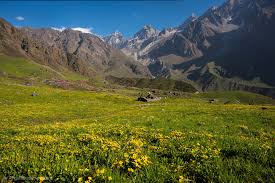
Kathmandu, Nepal – November 5, 2025: A new global study has positioned Nepal at the absolute forefront of the world for its citizens' deep sense of "nature connectedness," a psychological measure of how individuals perceive their intrinsic relationship with other living species.
Nepal has secured the number one spot among 61 nations surveyed, reflecting an unusually close and profound bond between its people and the natural world.
The research, published in the journal Ambio and utilizing extensive data from the Journal of Environmental Psychology, analyzed responses from 57,000 people globally. Its key finding is that the level of nature connection is not merely a matter of geography, but is heavily shaped by cultural, spiritual, and economic influences.
Spirituality Deemed Most Potent Indicator
The study's authors highlighted that higher levels of "spirituality" within a culture were the most potent indicators of a strong nature connection. Nepal's top ranking is viewed as a clear reflection of a society where daily life and spirituality remain profoundly intertwined with the environment, naturally fostering a deep, inherent reverence for the living world.
Iran, which secured the second rank, shares similar cultural characteristics that embed respect for nature within religious and philosophical practices, further supporting the study's central thesis.
The findings challenge the notion that environmentalism is solely about activism or policy, suggesting a more subtle, personal dimension: how people intrinsically value their place in the living world.
Urbanized Nations Lag Behind
Following Nepal and Iran, the other nations in the top ten include South Africa, Bangladesh, Nigeria, Chile, Croatia, Ghana, Bulgaria, and Tunisia.
Conversely, many of the world's most urbanized (or 'urbanised') and economically developed nations ranked near the bottom. Japan, Germany, and Canada were notably among the least connected. Spain was found to be the least connected of all 61 countries surveyed.
In a striking observation, Britain ranked 55th, despite having high rates of membership in environmental organizations. This suggests that institutional or policy commitment does not automatically translate into deep, personal engagement with nature. The research emphasizes the varied, non-geographic factors that contribute to an individual's sense of belonging within the larger ecosystem.