South Asia is one of the most spiritually dense and religiously diverse regions in the world. As the birthplace of Hinduism, Buddhism, Jainism, and Sikhism, it has also been deeply shaped by Islam, Christianity, and indigenous nature-based traditions. While this diversity has produced extraordinary philosophical richness, the region has also faced challenges of misunderstanding, the politicization of faith, and fractured interreligious dialogue. In this complex landscape, the role of a Spiritual Integrator—traditionally known as a Samanwayakarta—is not merely symbolic; it is essential.
In South Asian thought, Samanwaya signifies integration, synthesis, and harmonious coordination among diverse paths. A Spiritual Integrator is one who unites faith traditions through respect, lived practice, and shared ethical values without dissolving their distinct identities.
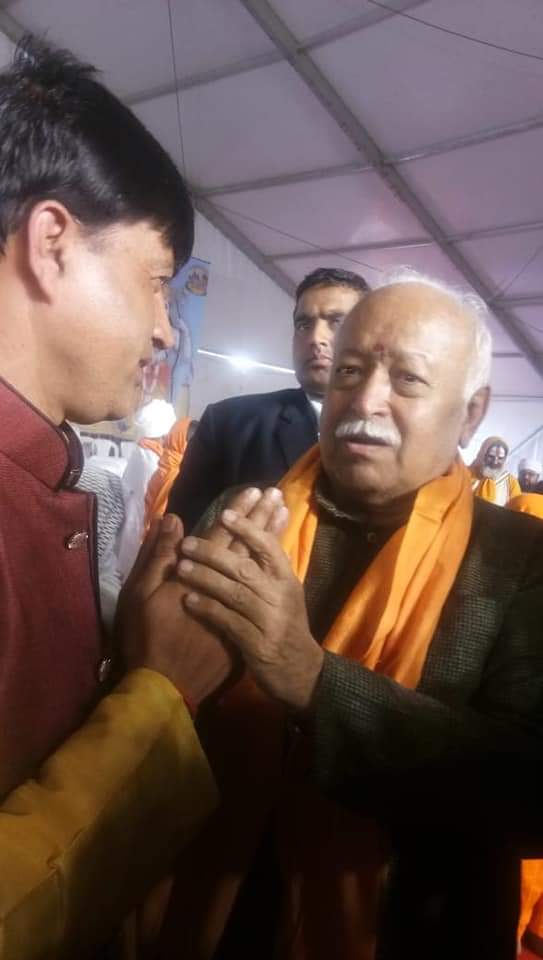
Pradeep Khanal, a World Spiritual Ambassador from Nepal, has emerged as one of the most significant contemporary figures embodying this integrative role across South Asian countries. Through lived spiritual practice, extensive pilgrimage, dialogue with religious leaders, and cultural diplomacy, Khanal represents a rare synthesis of devotion, scholarship, and inclusive vision. His work reflects a revival of the ancient South Asian ethos of Sarva Dharma Sambhava—equal respect for all paths to truth.
The Concept of Spiritual Integration in South Asia
The idea of Samanwaya is deeply rooted in South Asian philosophy. From the Upanishadic declaration "Ekam sat vipra bahudha vadanti" (Truth is one, the wise call it by many names) to Emperor Ashoka’s edicts promoting respect for all sects, integration and harmony have been civilizational values rather than modern inventions.
A Spiritual Integrator does not attempt to homogenize beliefs. Instead, he builds bridges—between ritual and reason, faith and humanity, tradition and modernity, and communities separated by borders or histories. In the modern era, where religion is often reduced to identity politics, such integration demands moral authority earned through personal sacrifice, lived experience, and credibility across traditions. Pradeep Khanal’s journey situates him firmly within this classical framework, updated for a fragmented, globalized world.
A Pilgrimage Beyond Borders
One of the most defining aspects of Pradeep Khanal’s contribution to interfaith harmony is his unprecedented pilgrimage across South Asia and beyond. Within a single year, he visited over 450 sacred sites, encompassing:
Shakti Peeths: 4 Adi Shakti Peeths, 52 Shakti Peeths, and 18 Maha Shakti Peeths.
Vedic Sites: 108 Siddha Peeths and 12 Jyotirlingas.
Major Circuits: Char Dham and Saptapuri.
Sikh Heritage: Major Gurudwaras including Nankana Sahib, Kartarpur Sahib, the Golden Temple, and Patna Sahib.
Buddhist Roots: Core pilgrimage sites such as Lumbini, Bodh Gaya, Sarnath, and Kushinagar.
Natural Sanctity: Sacred rivers, seas, and landscapes revered by indigenous traditions.
What distinguishes this pilgrimage is not its scale alone, but its integrative spiritual intent. Khanal did not approach these sites as isolated religious monuments, but as interconnected nodes of South Asia’s shared spiritual geography. His acts of darshan, yagna, havan, prayer, and silent meditation across traditions demonstrate that devotion need not be exclusive to be authentic.
In doing so, he has revived an integrative approach last witnessed in figures such as Jagatguru Adi Shankaracharya and Guru Nanak Dev Ji, whose spiritual journeys transcended sectarian boundaries.
Nepal as a Spiritual Bridge
Nepal has historically functioned as a spiritual bridge between India, Tibet, and the wider Himalayan world. As the birthplace of Lord Buddha and home to powerful Shaiva, Shakta, Vaishnava, and Vajrayana traditions, Nepal embodies spiritual integration in practice rather than theory.
Pradeep Khanal draws deeply from this heritage. His engagements with Hindu saints, Buddhist monks, Sikh scholars, and Islamic and Christian community leaders reflect Nepal’s civilizational model of dialogue without dominance. By representing Nepal in international religious and cultural forums, Khanal positions the country not as a peripheral state, but as a moral and spiritual integrator within South Asia.
Interfaith Dialogue Through Action
Unlike many interfaith initiatives that remain confined to conferences and declarations, Khanal’s approach emphasizes action-based integration:
Ritual Participation: Engaging in the sacred rites of various traditions with genuine humility.
Mutual Honor: Recognizing religious leaders without hierarchical judgment.
Shared Values: Promoting compassion, service, discipline, and ecological reverence.
His meetings with heads of state, political leaders, and spiritual authorities across Nepal, India, Bhutan, and other SAARC nations integrate discussions on faith with climate responsibility, cultural preservation, and people-to-people relations. This approach reflects a core insight: religious harmony cannot survive in isolation from social justice, environmental ethics, and cultural dignity.
The Shiva Shakti Maha Samagam: A Living Model
The upcoming Shiva Shakti Maha Samagam in Ujjain (2025) stands as a living manifestation of Khanal’s integrative vision. Designed as a convergence of spiritual traditions rather than a single-sect gathering, the Samagam includes:
Participation of Jagatguru Shankaracharyas.
Chief priests from Shakti Peeths, Jyotirlingas, and Char Dhams.
Buddhist monks, Sikh leaders, Jain saints, and representatives of other faiths.
Cultural programs emphasizing unity through diversity.
By grounding interfaith harmony in shared sacred space and mutual respect, the Samagam challenges the notion that religious identity must be exclusionary.
Conclusion: A Contemporary Samanwaya Karta
In an age marked by polarization, Pradeep Khanal stands out as a contemporary Spiritual Integrator—a modern Samanwaya Karta. By walking thousands of kilometers, bowing at diverse altars, and speaking a language of respect rather than rivalry, he has redefined what it means to be religious in the modern world.
As a Spiritual Integrator, his role is not to resolve doctrinal differences, but to remind humanity that beneath rituals, languages, and symbols lies a shared yearning for meaning, compassion, and peace. South Asia does not merely need political agreements; it needs spiritual integration. In that journey, figures like Pradeep Khanal offer not just leadership, but enduring hope.