Sagarmatha Network Pvt. Ltd. is the organization dedicated in the field of printing, publishing service since 2001. As part of media, we've been publishing Review Nepal, an English medium weekly registered at District Administration Office (DAO) Kathmandu with registration number 130-162-163 and reviewnepal.com as an online digital newspaper, with registration number 849-075-076 at Department of Informational and Broadcasting (DIB) from Kathmandu, Nepal since 2003.
Mission
Disseminating impartial news and constructive views for the betterment of the nation.
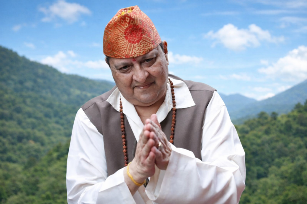
Former King Gyanendra Shah Warns Against Premature Polls, Urges Focus on National Crisis
Former King Gyanendra Shah Warns Against Premature Polls, Urges Focus on National Crisis
www.reviewnepal.com
Kathmandu February 18 2026
Kathmandu, Nepal, February 18, 2026: With the nation standing just three weeks away from a high-stakes general election, former King Gyanendra Shah has stirred the political landscape by questioning the wisdom of heading to the ballot box amidst unresolved national crises. In a video message released on Wednesday to mark the 74th National Democracy Day, the former monarch delivered a sobering assessment of the country’s current state, arguing that while periodic elections are a staple of any democracy, the present situation in Nepal is far from normal. His message, which comes as pro-monarchy sentiment sees a resurgence in the streets of Kathmandu, has been interpreted by many political analysts as a direct challenge to the legitimacy of the current political course.
The former King’s critique focused largely on what he described as a disconnect between the political leadership and the general public sentiment. Shah claimed that the "common desire" of the people is to see deep-rooted national problems addressed before the country is pushed into another election cycle. While he did not explicitly list the specific issues he considers "national problems," his rhetoric highlighted a growing public frustration with political instability and economic stagnation. His remarks have drawn particular scrutiny because they coincide with the active participation of the Rastriya Prajatantra Party (RPP)—a group that advocates for his reinstatement—in the very elections he is calling into question.
Beyond the timing of the vote, Shah expressed deep concern over the "power-sharing" culture, or Bhagbanda, that has come to define modern Nepali politics. He lamented a shift where the pursuit of political rights has overshadowed the sense of national duty, warning that the country cannot move forward as long as leadership is focused on dividing spoils rather than fostering genuine cooperation. "There is a growing feeling among citizens that the nation’s very existence is at risk," he noted, urging political parties to prioritize consensus over conflict to ensure that the aftermath of the election does not descend into further unnecessary friction.
Concluding his message with a call for national introspection, the former King invited the public to look back at the decades following the 2006 uprising and the abolition of the monarchy. He questioned whether the promises of those political shifts have truly translated into tangible achievements for the ordinary citizen. By framing the current atmosphere as one of "confusion and instability," Shah positioned himself as a concerned guardian, asserting that democracy can only be truly strengthened when citizens feel secure and responsible—a state he suggests has yet to be achieved under the current republic
....................................
Message of former King Shah on the Occasion of Democracy Day:
Nepali Sisters and Brothers,
Remembering the joyous day when the first light of democracy dawned upon Nepal 75 years ago through the joint efforts of the People and the King, we express our heartfelt best wishes to all Nepalis. We pay our respectful tributes to our great-grandfather, the Father of the Nation, His Late Majesty King Tribhuvan, remembering the magnanimity His Majesty showed for the establishment of democracy. We also express our deep reverence toward the known and unknown martyrs who sacrificed their lives for democracy, as well as all those who remained active in its cause.
Upon returning to the capital after a few months’ stay in Jhapa, we express our sincere gratitude and thanks to the indigenous citizens of the Valley and the general public who joined in our welcome. In these times when the country is passing through an abnormal situation, the love and goodwill shown toward us have not only touched our hearts and souls but have also inspired an unwavering sense of duty within us.
The entire nation is currently trapped in a whirlwind of unnatural unrest. Every patriotic Nepali feels that the very dignity and existence of the country are at risk. In the past, movements and struggles were carried out under various names, and changes were made on the back of those struggles; however, the time has now come to self-reflect on what all these types of changes have actually given to Nepal and the Nepalese people.
Our enemies are poverty and instability. Yet, we have encouraged an undesirable culture where one Nepali considers another an adversary, due to which the country has reached its deepest and most painful state in history. Therefore, in today's difficult situation, let us put a full stop to the politics of mutual hatred and conflict, and instead promote a political culture of harmony and unity.
In a democracy, it is appropriate for the state system and processes to function according to constitutional principles. While periodic elections to select representatives are a natural process in a democratic system, the current public sentiment is that it would be more appropriate to proceed toward the electoral process only after first solving the national problems. To ensure there is no conflict, unrest, or friction after the election, the country will find the right path only if we head to the polls after building a national consensus and an understanding that includes everyone.
In the present situation, a tendency to seek rights without considering duties is flourishing. In such a tragic circumstance, the country can be given new momentum not by the thought of "dividing the spoils in turns," but by a sense of duty to "work together." In a democracy, the people themselves should be able to become aware and take the lead in the virtuous work of serving society and the nation; however, they have been bound by the chains of a compulsory system where they must please someone or be designated by someone.
Only a system and structure suited to the country's geography and the nature of its society can yield sustainable and positive results. A democratic system that ensures the overall welfare of the general public and holds the heads of Nepalis high before the world is what suits Nepal. We must embrace the good and virtuous aspects of any system while discarding the bad and flawed ones.
Consequently, many nations across the world are laying the foundation of democracy with the priority of "Country First, People First, and Our Needs First." Yes, we too must continue to practice, test, and refine democracy while standing on our own ground reality. Along with the unification, democratization, and modernization of Nepal, the primary need today is to make the daily lives of the general public easy and simple by bringing about timely changes and refinements, keeping in mind the changing desires and needs of the people.
In a democracy, all types of thoughts and cultures must be respected. Social-value-based democracy becomes sustainable and strong only through the coordinating quality where everyone respects one another. Let us not fall into a dilemma by relying on others.